Table Of Content

However, the House of Lords Reform Bill 2012 was withdrawn after backbench Conservative MPs threatened to rebel. Since 1999, there have been several unsuccessful attempts to reform the House of Lords, mostly due to disagreements over what should replace it. When in government, the party established a royal commission chaired by Lord Wakenham recommending a mostly appointed, partly elected chamber. The Constitutional Reform Act 2005, separated the judiciary from parliament, removing the Lords’ judicial remit and passing it to the Supreme Court of the UK. In 2014, reforms were passed to enable peers to retire or resign in an effort to reduce the chamber’s size. While there are different routes to joining the Lords, peers, unlike MPs in the Commons, are not elected by the public but are either appointed (formally by the monarch on the advice of the prime minister) or, in a small number of cases, sit in the Lords ‘by right’.
British Parliament
Former Lord Chancellors and holders of other high judicial office could also sit as Law Lords under the Appellate Jurisdiction Act, although in practice this right was only rarely exercised. The Conservative–Liberal Democrat coalition agreed, after the 2010 general election, to outline clearly a provision for a wholly or mainly elected second chamber, elected by proportional representation. As an interim measure, appointment of new peers would reflect the shares of the vote secured by the political parties in the last general election. Peers have gone far beyond their customary constitutional right to protest about a policy they do not like. They protest that their amendments are not intended to wreck the bill, but some peers clearly want to impede its passage until a new government arrives to withdraw it.
Committees

Such hereditary dignities can be created by the Crown; in modern times this is done on the advice of the Prime Minister of the day (except in the case of members of the Royal Family). Other public bills cannot be delayed by the House of Lords for more than two parliamentary sessions, or one calendar year. These provisions, however, only apply to public bills that originate in the House of Commons, and cannot have the effect of extending a parliamentary term beyond five years. A further restriction is a constitutional convention known as the Salisbury Convention, which means that the House of Lords does not oppose legislation promised in the Government's election manifesto.
Other ministers
The House would be presided over not by the Lord Chancellor, but by the Lord High Steward, an official especially appointed for the occasion of the trial. If Parliament was not in session, then peers could be tried in a separate court, known as the Lord High Steward's Court. Only peers, their wives, and their widows (unless remarried) were entitled to such trials; the Lords Spiritual were tried in ecclesiastical courts.
Burgage plots and Regional Wealth are related
You'll also get a message saying that new family members have joined your existing families, expanding your overall population. You can view your overall number of families and available homes on the top left of the upper panel. Only those with titles in the Peerages of England, Scotland, Great Britain and the United Kingdom are currently eligible for a seat. It is time for the Lords, which is a revising chamber, to accept the will of the elected chamber and the will of the vast majority of our constituents who want to see this unsustainable position in the Channel stopped,” he said. It now returns to the Commons in a fourth round of parliamentary ping pong, with Rishi Sunak having declared that both Houses will sit throughout the day and night until the legislation is passed. There are still single-use buildings you’ll have to build — things like logging camps and sawpits, sheep farms and weaver’s workshops, barley farms and malthouses — but the final step in the supply chain is usually built at a burgage plot.
Sitting
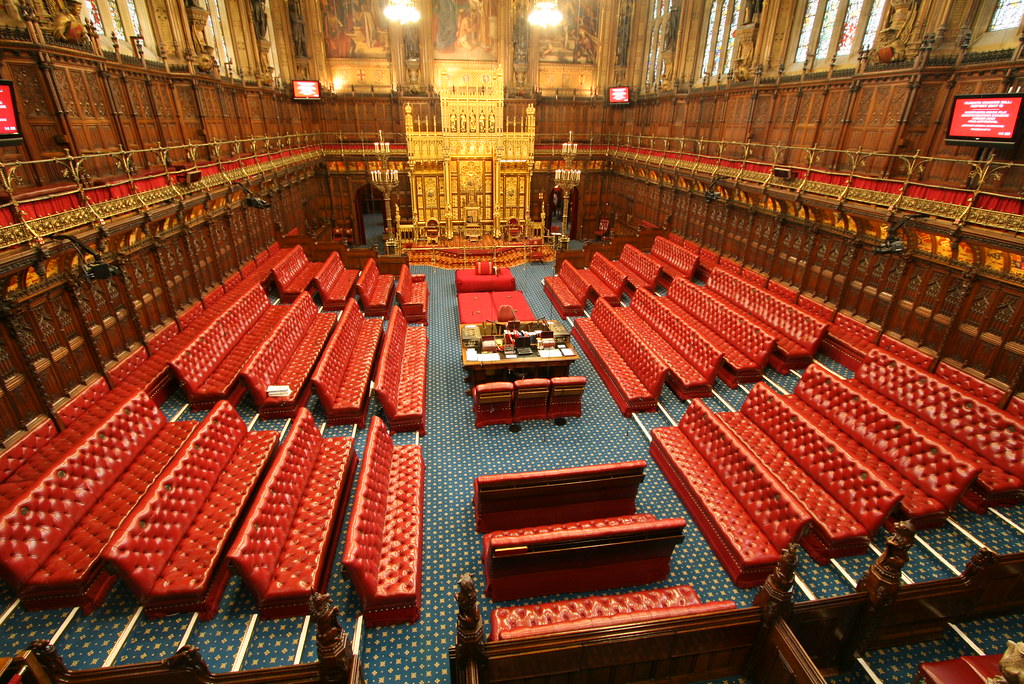
After bowing to the Lord Chancellor for the third time, the peers would, along with the Garter Principal King of Arms and the Gentleman Usher of the Black Rod, leave the Chamber, with the new peer shaking hands with the Lord Chancellor as he left. The new peer would later return, and possibly participate in a debate (a member of the Royal Family, earlier seated beside the Throne, would now sit on the Crossbenches, signifying his/her political neutrality). However, the House of Lords does play a role in government accountability, through its questioning of cabinet ministers and the formation of special committees to address important matters of state. Its members are now mostly appointees, not peers who inherit their seats in the House of Lords.
Many other popular hard rock musicians contributed to the songwriting on the album, including Stan Bush, David Glen Eisley of Giuffria, Mandy Meyer of Asia and Johnny Warman. The role of presiding over the House of Lords was removed from the office of Lord Chancellor by the Constitutional Reform Act 2005. As a result, the Lord Chancellor's former role in introductions has been the Lord Speaker's since 2006. When a member of the Royal Family was being introduced, there would often be more in the procession, as the Great Officers of State and the Great Officers of the Household (and sometimes others, such as an aide-de-camp carrying a coronet) would be involved.
Removal from House membership
The House of Lords’ powerlessness to stop the Rwanda bill shows its limits - The Guardian
The House of Lords’ powerlessness to stop the Rwanda bill shows its limits.
Posted: Fri, 02 Feb 2024 08:00:00 GMT [source]
The House of Lords oversees more general scrutiny work by questioning ministers, conducting inquiries and engaging in debates. There are various Lords select committees in that investigate specialised topics and publish reports, which can contribute to more informed policy decisions. During question time and debates in the chamber members put questions to government ministers who must respond.
More than 100 years later, in 1523, philosopher and writer Sir Thomas More, a Member of Parliament (M.P. for short), was the first to raise the issue of “freedom of speech” for lawmakers in both houses during deliberations. A half-century hence, during the reign of Queen Elizabeth I in 1576, Peter Wentworth, M.P., made an impassioned speech arguing for the same right; he was sentenced to imprisonment in the Tower of London. During this time, too, Parliament began to take on more authority within the English government. In 1362, for example, it passed a statute decreeing that Parliament must approve all taxation.
Until 1999 its membership included clergy, hereditary peers, life peers (peers appointed by the prime minister since 1958), and the judges of the Supreme Court of Judicature (Britain’s final court of appeal). Though it predates the House of Commons and dominated it for centuries, its power has gradually diminished. Its power to affect revenue bills was constrained by the Parliament Act of 1911, and in 1949 its power to delay by more than a year the enactment of any bill passed by the Commons was revoked. In 1999 the hereditary peers lost their right to sit in the House of Lords, though an interim reform retains their voice in a more limited fashion. The body’s chief value has been to provide additional consideration to bills that may be not be well formulated. The powers of the modern House of Lords are extremely limited—necessarily so, since the permanent and substantial majority enjoyed there by the Conservative Party would otherwise be incompatible with the principles of representative government.
As it does not hold a majority, the government is defeated in the House of Lords quite often, generally on amendments to bills. Constitution Unit research shows that in recent years just under half of defeats have gone on to be accepted by the House of Commons, leaving a lasting impact on policy. A high-profile example under the Labour government occurred in 2006, when the House of Lords repeatedly voted against compulsory ID cards. The government chose to delay the implementation of ID cards until after the 2010 election. That election resulted in a Conservative-Liberal Democrat coalition government, which went on to scrap ID cards.
The Reading Clerk reads the Letters Patent presented to him by the Garter Principal King of Arms, and administers the Oath of Allegiance or Solemn Affirmation to the new peer. The new peer and his supporters together bow to the Cloth of Estate, which is placed at the end of the House, behind the sovereign's throne and the Woolsack. The procession then proceeds out of the Chamber, the new peer stopping at the Woolsack to shake hands with the Lord Chancellor. Upon returning to the Chamber, the new peer takes any seat he pleases, sitting with his/her party, or, if neutral, sitting amongst the Crossbenchers. The personal procedure, however, was abandoned during the 17th century, and in 1621 the House of Lords began the ceremony of introduction.[1] The ceremony has evolved over the years, generally growing more complex.


No comments:
Post a Comment